
Introduction
Walk into any room and the first thing your eyes register — even before the furniture — is the light. The color of that light, measured in Kelvins (K), quietly shapes how a space feels, how people work, and even how well they sleep. Whether you are an interior designer, a lighting distributor, or a project buyer, choosing the right color temperature is one of the highest-impact decisions you will make.
In this guide, we break down the three most common indoor color temperatures — 3000K, 4000K, and 6000K — and explain exactly where each one belongs. We will also show you how full-spectrum, human-centric lighting raises the bar for visual comfort and eye health.
What Is Color Temperature?
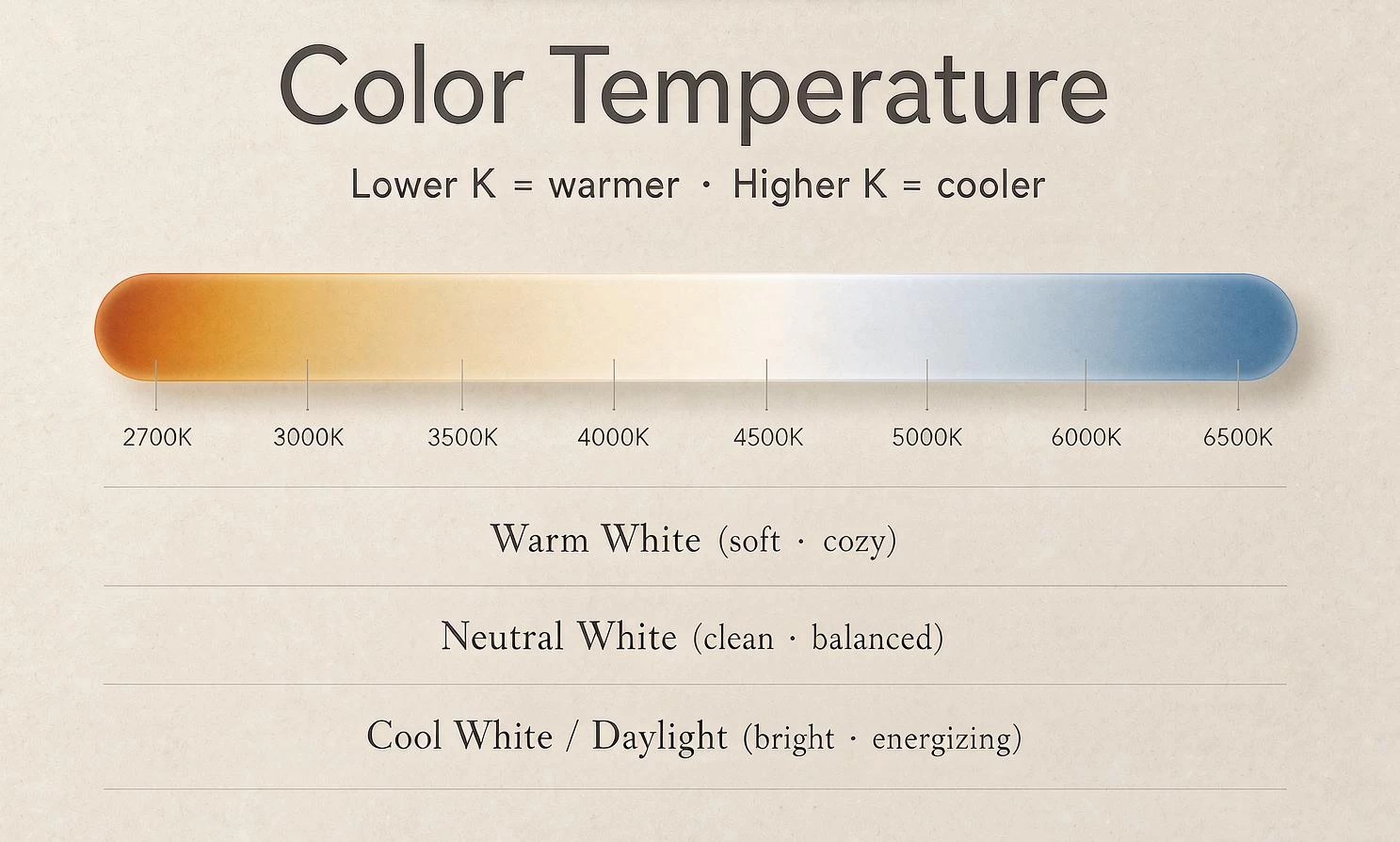
Color temperature describes the visual "warmth" or "coolness" of white light, measured in Kelvin (K). The scale runs opposite to what many people expect: lower numbers mean warmer (more yellow/orange) light, while higher numbers mean cooler (more blue/white) light.
- 2700K–3000K — warm white: soft, yellowish, cozy
- 3500K–4500K — neutral white: clean, natural, balanced (4000K is the sweet spot)
- 5000K–6500K — cool white / daylight: bright, crisp, energizing (6000K is typical)
Beyond color, quality matters just as much. Metrics such as the Color Rendering Index (CRI, expressed as Ra), blue-light hazard rating (RG0), and flicker percentage decide whether a lamp is merely bright or genuinely comfortable. At Solarix, our indoor panels and downlights are engineered around full-spectrum, Ra≥95, RG0, flicker-free light — so the color temperature you choose actually delivers on its promise.
3000K: Warm White for Comfort and Relaxation
3000K produces a soft, golden glow reminiscent of early-evening sunlight or a fireplace. It lowers visual tension and signals the body to wind down.
Best scenarios for 3000K
- Residential living rooms and bedrooms — warmth makes homes feel inviting and restful
- Hotels, resorts, and boutique guest rooms — luxury hospitality depends on a cozy, premium feel
- Restaurants, cafés, and lounges — warm light makes food look appetizing and keeps diners lingering longer
- Retail stores selling fashion, furniture, or cosmetics — warm tones flatter skin, textiles, and wood
- Art galleries and museums (accent lighting) — warm spotlights bring out golds and wood tones
Caveat
3000K is relaxing but not ideal for detailed visual tasks. In a workspace, it can feel sleepy and reduce contrast, so avoid it for offices, classrooms, and precision work.
4000K: Neutral White for Focus and Balance
4000K is the industry workhorse — clean, natural light that sits between warm and cool. It keeps people alert without feeling cold or clinical, which is why it dominates commercial and educational spaces.
Best scenarios for 4000K
- Offices and co-working spaces — the top choice for concentration, reducing eye strain over long hours
- Classrooms and training rooms — the recommended standard for student focus and reading comfort
- Retail stores and supermarkets — reveals true product colors so buyers see exactly what they get
- Hospitals, clinics, and pharmacies — neutral light supports accurate examination and a hygienic feel
- Kitchens, bathrooms, and home offices — crisp enough for tasks, warm enough to stay comfortable
- Corridors, lobbies, and meeting rooms — balanced light that feels professional day and night
The human-centric advantage
For spaces where people spend eight or more hours a day, color temperature alone is not enough. Solarix's 4000K full-spectrum panels combine Ra≥95 color rendering, RG0 blue-light safety, and zero flicker to protect the eyes and keep energy steady. That is the difference between "bright" lighting and "healthy" lighting.
6000K: Cool White for Clarity and Energy
6000K is crisp, high-contrast daylight that maximizes visibility and suppresses drowsiness. It makes details pop, which is exactly what task-driven and inspection-heavy environments need.
Best scenarios for 6000K
- Industrial and warehouse lighting — bright, uniform light for safety and precision on the floor
- Workshops, garages, and assembly lines — high contrast helps workers spot defects fast
- Hospitals (operating and treatment areas) — cool light supports surgical accuracy
- Supermarkets and cold-storage displays — daylight tones keep fresh goods looking clean and appealing
- Security and emergency areas — maximum visibility for cameras and staff
- Garages, basements, and utility rooms — practical, energizing light for utilitarian spaces
Caveat
6000K can feel harsh in the evening and may disrupt sleep if used in bedrooms. For homes, reserve it for task zones and pair it with warmer light elsewhere.
How to Choose: A Simple Decision Framework
Still unsure? Start with the function of the room, not the fixture.
- Ask what people do there. Rest → 3000K. Work or learn → 4000K. Inspect or build → 6000K.
- Consider how long they stay. Longer hours favor 4000K neutral light to reduce fatigue.
- Check the products on display. Food, fashion, and wood favor warm light; hardware and electronics favor neutral or cool.
- Never trade quality for brightness. Choose full-spectrum, high-CRI, RG0, flicker-free sources so any color temperature stays comfortable.
- Blend when needed. Layered lighting — warm ambient plus cool task light — gives you the best of both worlds.
Color Temperature at a Glance
Color Temperature | Appearance | Mood & Effect | Best Scenarios | Avoid |
3000K (Warm White) | Soft golden glow | Cozy, relaxing, intimate | Homes, hotels, restaurants, fashion retail | Offices, classrooms, detailed work |
4000K (Neutral White) | Clean, natural white | Alert, balanced, focused | Offices, schools, retail, hospitals | (Few — the safest all-round default) |
6000K (Cool White) | Bright, crisp daylight | Energizing, high-contrast | Industry, workshops, medical, security | Bedrooms, evening use |
Why Color Temperature Is Only Half the Story
A common mistake is judging a lamp by its Kelvin number alone. Two 4000K fixtures can look and feel completely different if one has low CRI or visible flicker. That is why Solarix designs every Commercial & Indoor panel light, downlight, and LED around full-spectrum output and human-centric principles: Ra≥95 color fidelity, RG0 blue-light safety, and flicker-free drivers. The result is light that is accurate, comfortable, and kind to the eyes — whatever the color temperature.
Conclusion
3000K comforts, 4000K focuses, and 6000K energizes. Match the temperature to the task, then raise the bar with full-spectrum, human-centric quality. Whether you are outfitting a hotel, an office, or a warehouse, Solarix has the indoor lighting solution — panel lights, downlights, and LEDs engineered for both performance and well-being.