
Why Is Everyone Suddenly Talking About "Healthy Light"?
Think about your day. You wake up, switch on a light, sit in front of a screen all day, and come home to more artificial light. Most people spend 80–90% of their time indoors, which means we are bathed in artificial light far more than sunlight.
That is why "healthy lighting" has become one of the hottest topics in the lighting industry. For decades, we only asked whether a lamp was bright enough. Now we are asking a more important question: is the light good for our eyes and our bodies?
In 2026, full-spectrum LED is leading this change — moving from a premium option into the new standard for schools, offices, hospitals, shops and homes. This article explains everything in plain language, no technical background needed.
What Is Full-Spectrum LED? (And Why It Matters)
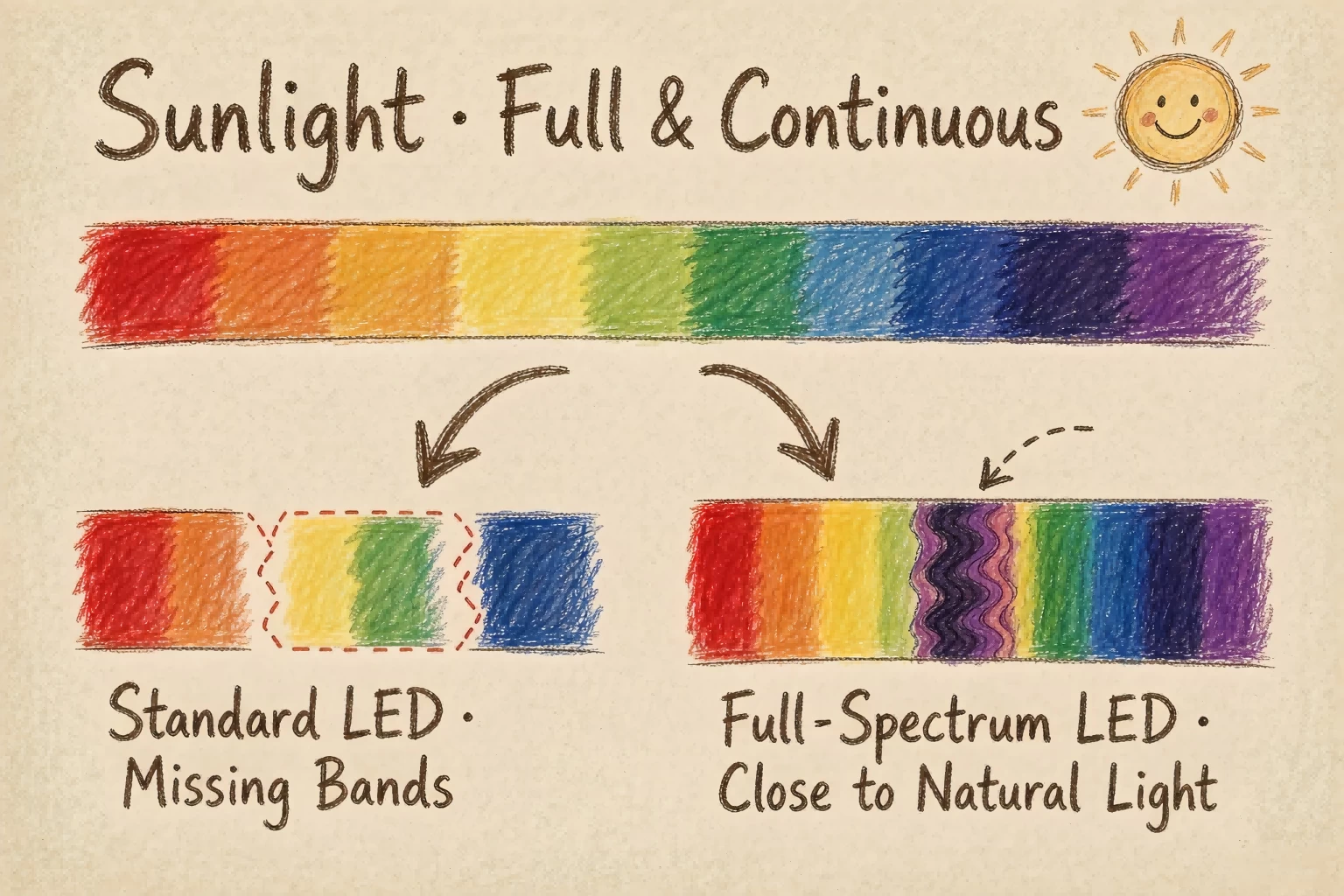
Natural sunlight contains a complete, continuous spectrum of light. Traditional LEDs, however, are missing parts of it — especially some blue and red wavelengths.
Full-spectrum LED is designed to fill in those gaps, producing light that is very close to natural sunlight. The result is lighting that simply looks and feels better:
- Colors look true. Full-spectrum LEDs usually reach a color rendering index (CRI) of Ra 95 or higher (some reach Ra 98). In plain words: things look the way they would in daylight.
- Less harmful blue light. Blue light itself is not evil — it is part of sunlight — but too much of the wrong kind can strain eyes. Full-spectrum LEDs are certified with the safest blue-light rating (RG0), which means "exempt from risk."
- No visible flicker. Poor-quality lights flicker constantly (often invisible to the eye but tiring over time). Full-spectrum products are designed to be essentially flicker-free, so your eyes stay comfortable even after hours of work.
Three Numbers That Tell You If a Light Is "Healthy"
You do not need to be an engineer to pick a good light. Just look for these three things:
- CRI (Ra) ≥ 95 — how true colors look under the light. Higher is better; 95+ means near-daylight quality.
- Blue-light rating RG0 — the safest category, meaning no risk to eyes under normal use.
- Flicker-free — the light is steady and smooth, so eyes don't get tired quickly.
Products that meet these three criteria are what the industry calls "healthy lighting."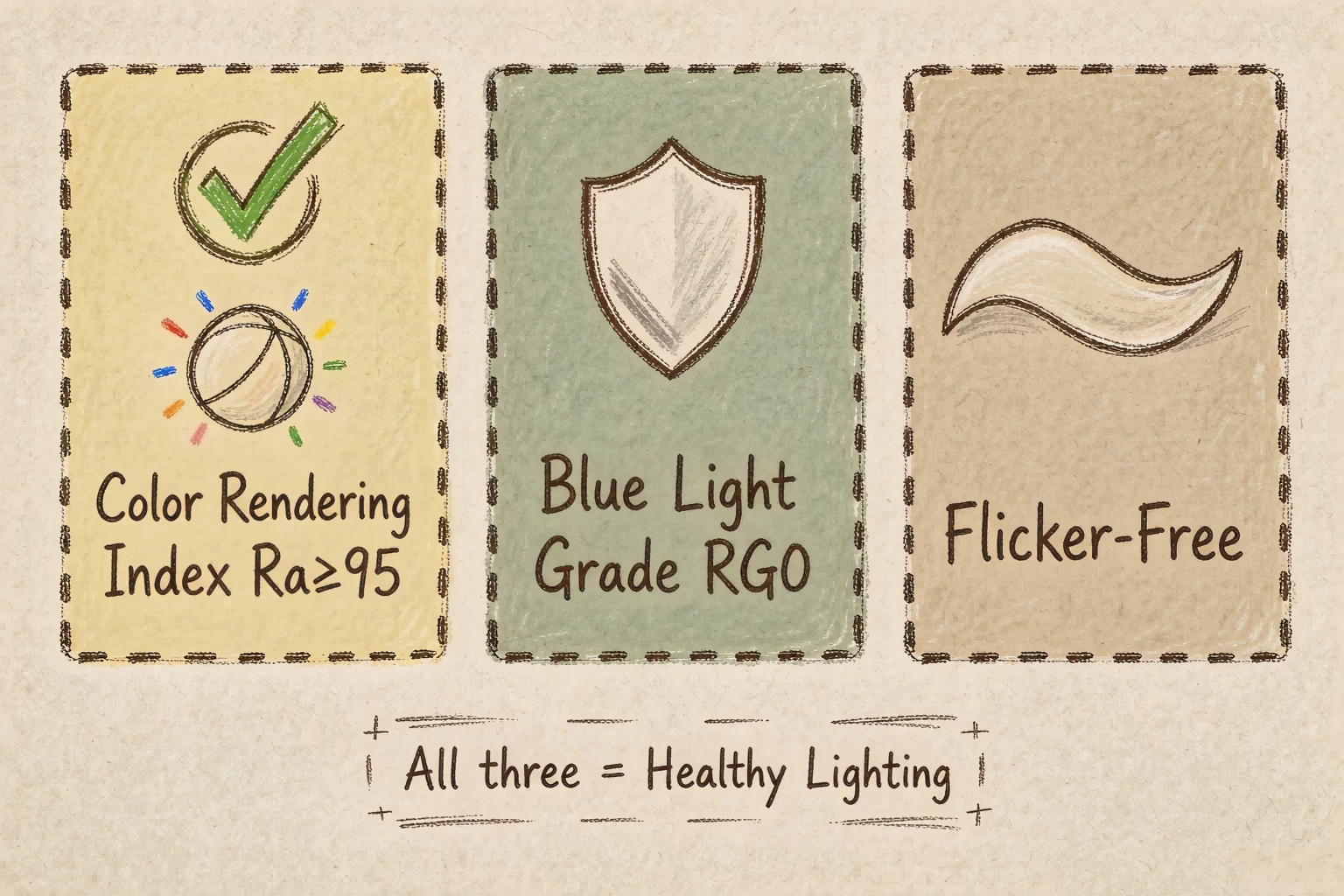
The Market Is Booming: Numbers Behind the Trend
This is not just a buzzword — the market data is striking.
Globally, the human-centric lighting market (lighting designed around people's health and wellbeing) is estimated at USD 4.2–4.6 billion in 2026. Research firms project strong growth ahead: most forecasts put the compound annual growth rate between 10% and 27%, with the market roughly doubling by 2030. The Asia-Pacific region is the largest market, driven by new buildings, hospitals and schools.
In China, the full-spectrum healthy lighting market is expected to exceed RMB 40–50 billion in 2026, growing at over 20% annually in recent years. According to industry data, penetration of low-blue-light full-spectrum LED products has already risen to about 47% — up 19 percentage points year on year. In other words, healthy lighting has moved from "nice to have" to "standard."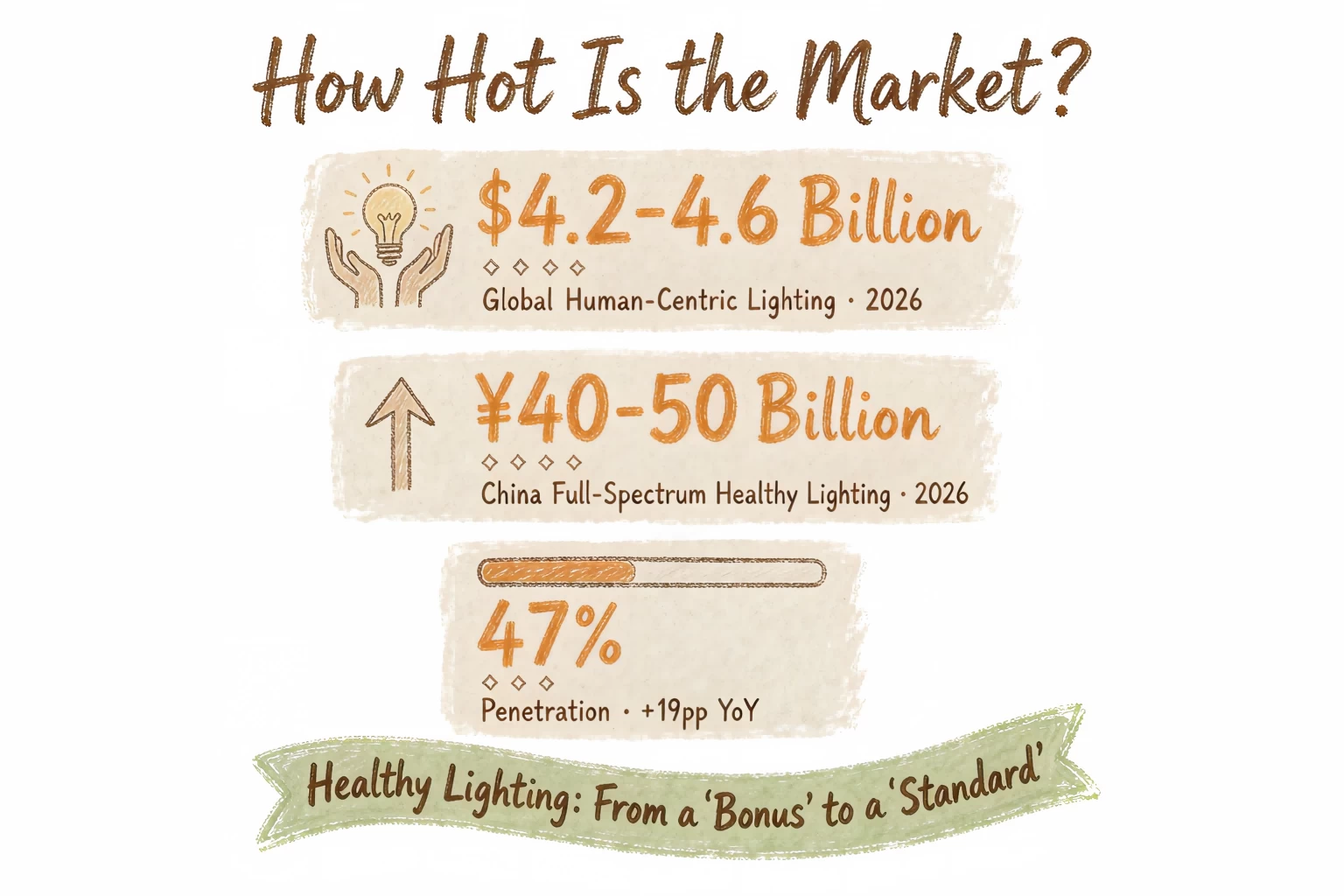
Why Now? Three Forces Driving the Change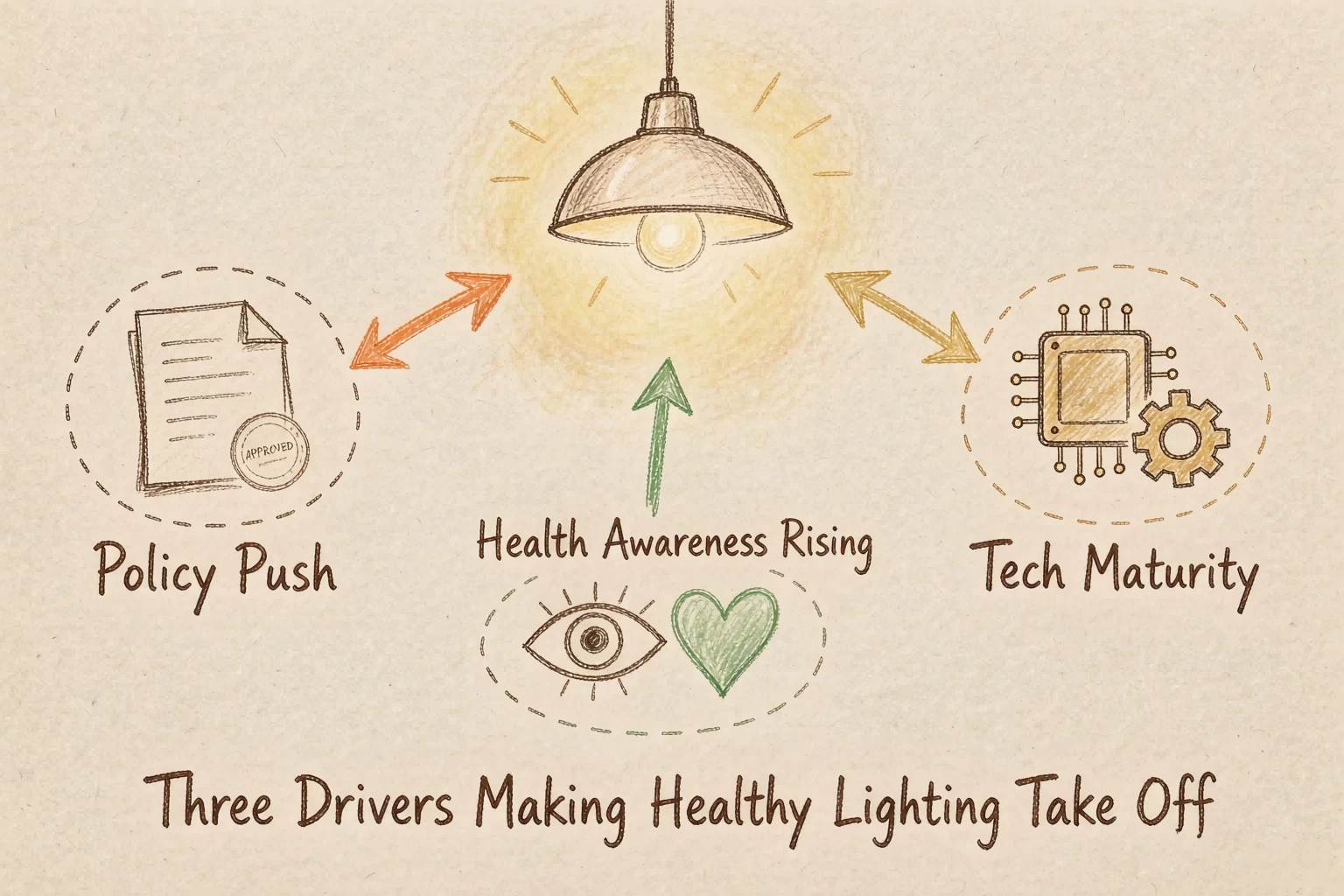
1. Government policies and standards
Many countries are making classroom, hospital and workplace lighting healthier by regulation. China, for example, has rolled out national programs to upgrade classroom lighting as part of child myopia (nearsightedness) prevention. Schools now specify high-CRI, low-blue-light, flicker-free lighting as a requirement, not an option.
2. Growing health awareness
After years of screens and remote work, people care more about eye fatigue, sleep quality and wellbeing. Parents want healthier light for children's homework; office workers want light that does not exhaust their eyes; families want a comfortable, restful home environment.
3. Technology has caught up
Full-spectrum LED chips have become affordable, and smart controls (tunable white, dimming, sensors) have become standard. What was once an expensive specialty product is now accessible to everyone.
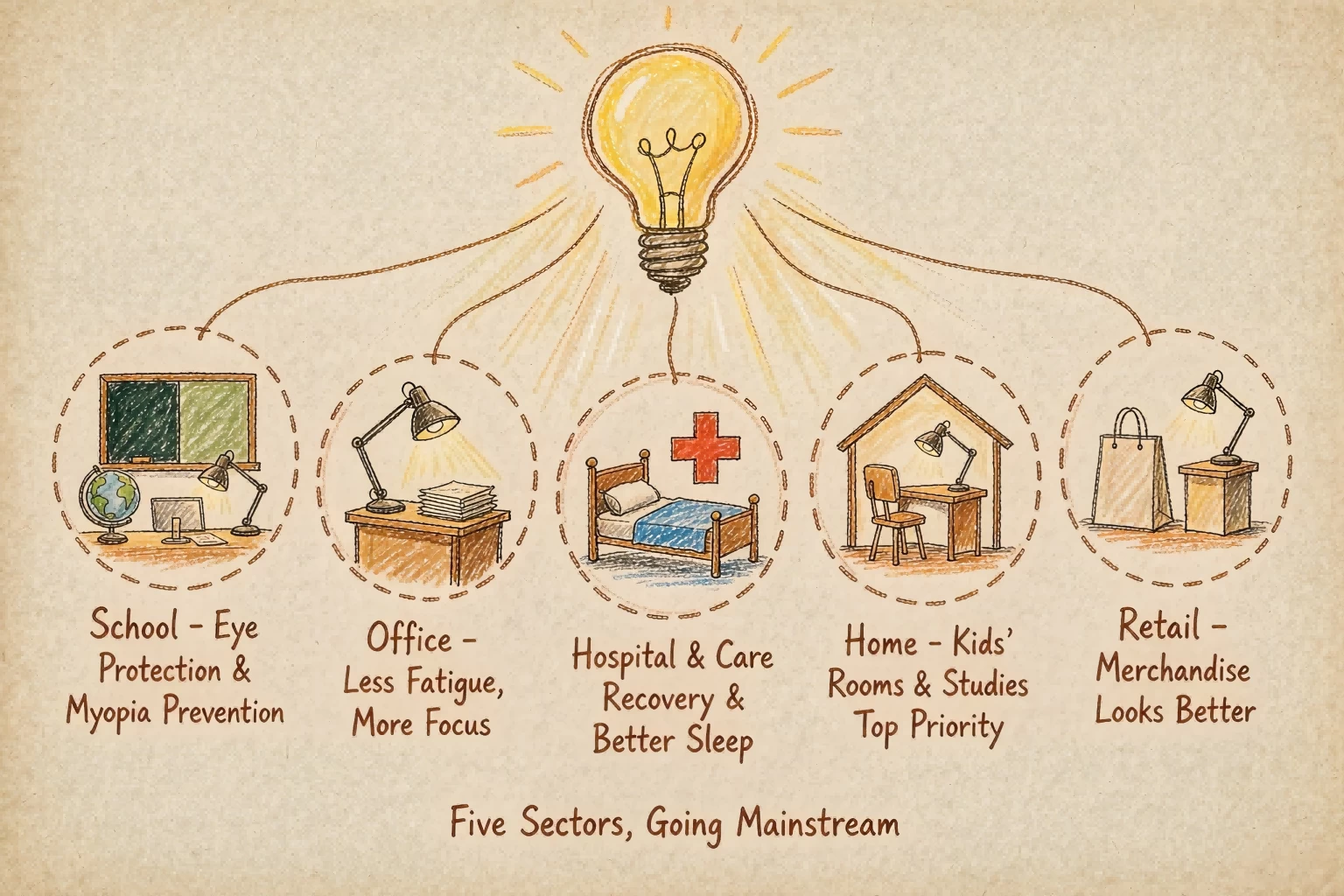
Where Full-Spectrum LED Is Becoming the New Standard
- Classrooms: Reducing eye strain and supporting concentration — the fastest-growing segment, driven by myopia prevention policies.
- Offices: Healthier light means less visual fatigue, better focus and happier employees.
- Hospitals and eldercare: Full-spectrum light supports recovery and helps regulate sleep-wake cycles for patients and staff.
- Homes: Especially children's rooms and study areas, where eye protection matters most.
- Retail and commercial spaces: Accurate color rendering makes products look their best — important for showrooms, clothing stores and food displays.
What's Next: Smarter and More "Human"
Looking ahead, healthy lighting is merging with smart technology:
- Tunable white (2700K–6500K): the light color changes through the day — cool and bright in the morning, warm and dim in the evening — following your natural rhythm (this is called human-centric or circadian lighting).
- Sensors and automation: lights adjust themselves based on presence and daylight, saving energy while keeping comfort.
- Interoperability: more products support universal standards like Matter, so they work smoothly with your existing smart home ecosystem.
The trend is clear: lighting is no longer just about seeing — it is about feeling good.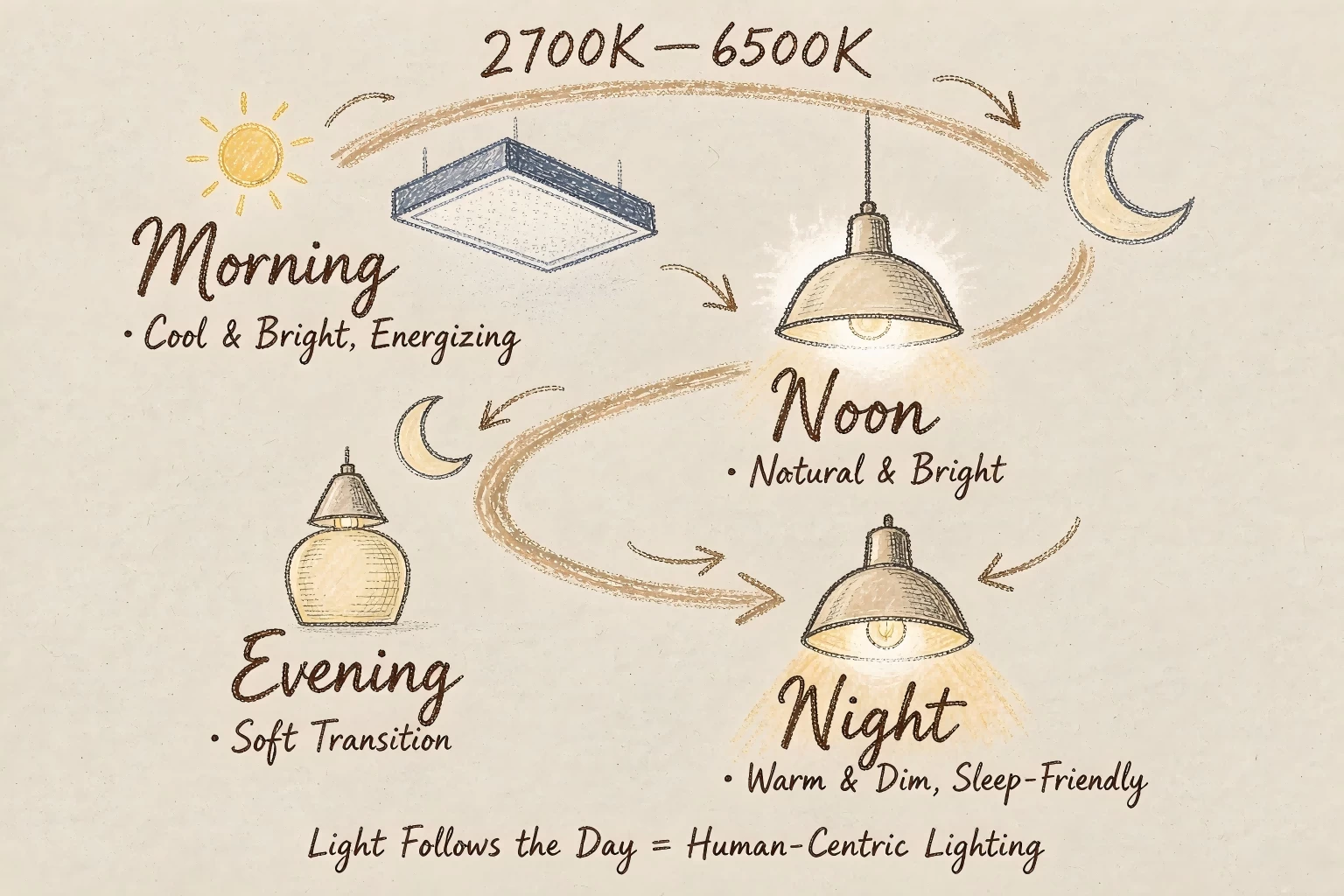
A Buyer's Checklist: Don't Get Fooled
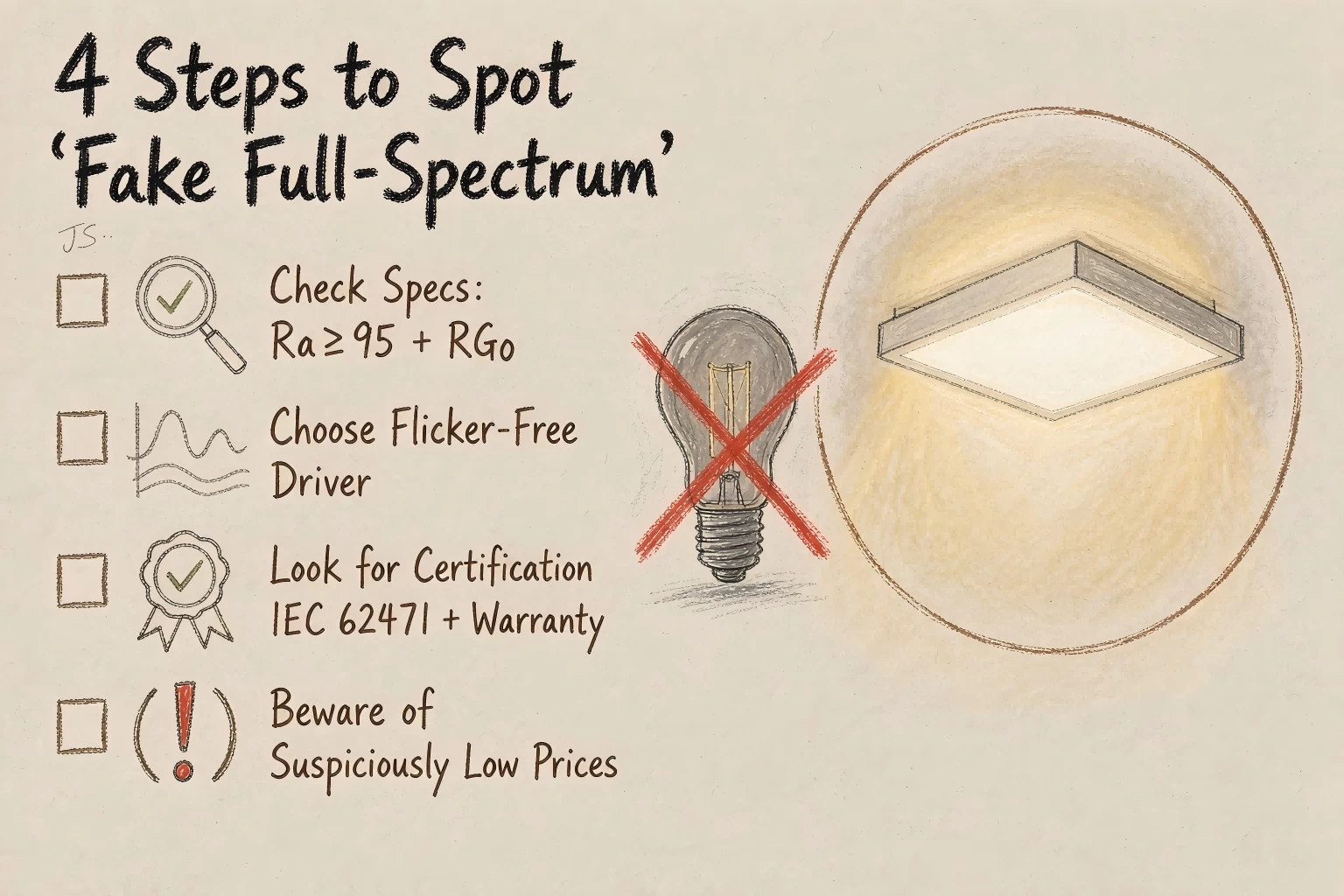
The market is growing fast, and not all "full-spectrum" products are created equal. When choosing lights, keep this checklist in mind:
- Check the datasheet for CRI Ra ≥ 95 and RG0 blue-light rating — these are objective, testable numbers.
- Prefer products with flicker-free drivers.
- Look for certifications (e.g., IEC 62471 for photobiological safety) and a solid warranty.
- Be wary of suspiciously cheap products — real full-spectrum chips and quality drivers cost money, and cutting corners usually means cutting quality.
Conclusion
In 2026, healthy lighting is no longer a luxury for hospitals and premium offices. Thanks to falling costs and rising awareness, full-spectrum LED is becoming the new standard for commercial spaces and everyday life — better for your eyes, your sleep and your wellbeing.
As a professional LED lighting manufacturer, Solarix (Guangzhou Xuyuan Lighting Technology Co., Ltd.) offers full-spectrum LED panel lights and healthy lighting solutions with high CRI, low blue light, flicker-free drivers and full certifications for classrooms, offices, hospitals and homes. If you are planning a lighting project, contact us — we will help you create a healthier light environment.