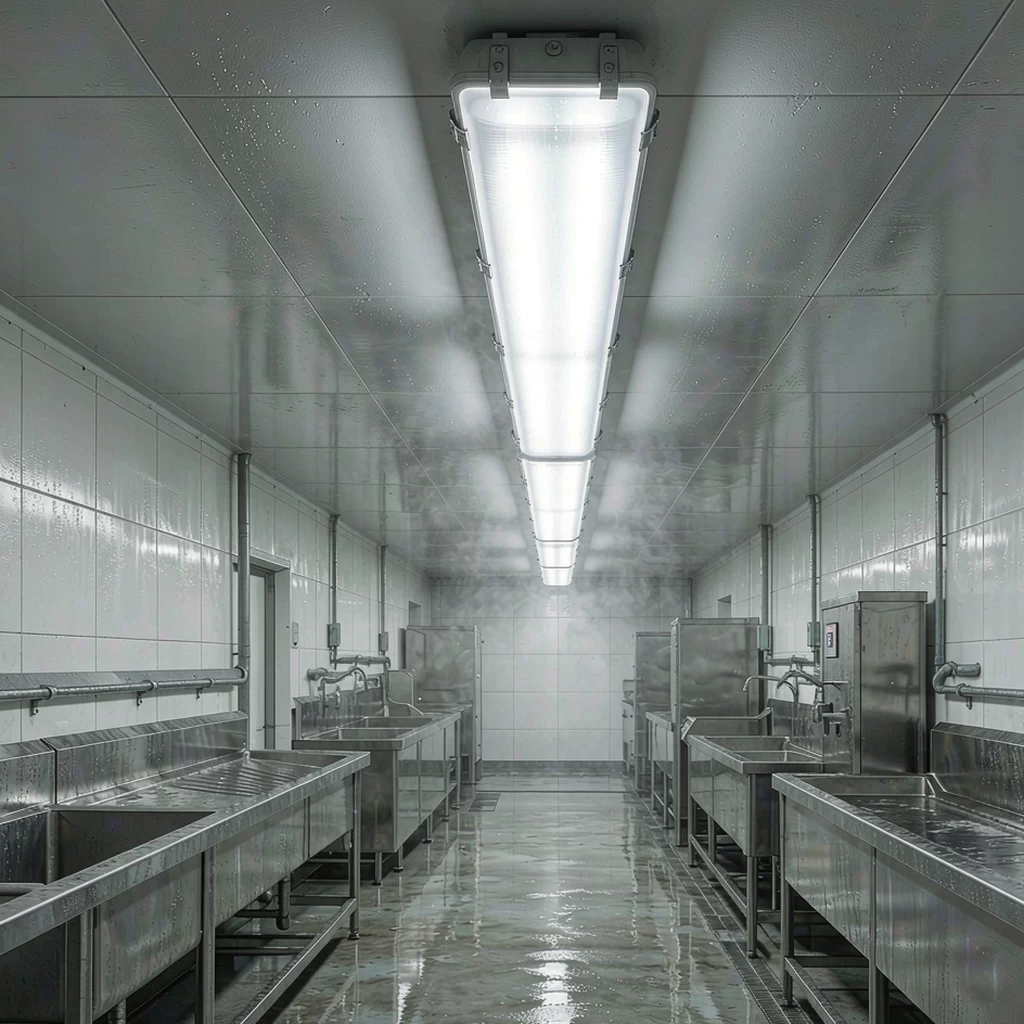
When a luminaire fails in a washdown corridor, an underground car park or a sub-zero freezer, the LED chip is rarely the culprit. Water, dust, cleaning chemicals and condensation get inside the housing and kill the driver. That is the failure mode the LED tri-proof light exists to prevent. For a B2B buyer, understanding what "tri-proof" actually guarantees — and what it does not — is the fastest way to avoid ordering the same fixture twice. This guide covers the three protections behind the name, how to read the IP and IK ratings on a datasheet, and how to specify sealed linear fixtures for parking garages, food processing plants and cold storage.
What "Tri-Proof" Actually Means
"Tri-proof" is a trade term rather than a formal standard, and suppliers define it differently. The usual definition covers three protections:
- Waterproof — the enclosure resists jets, spray or washdown, expressed as an IP rating.
- Dust-proof — sealed against dust ingress; the first digit of the IP code, where 6 means dust-tight.
- Corrosion-proof — housing, gasket and fixings resist the detergents, salt or humidity present in the environment.
Some suppliers add vandal or impact resistance, but that is really the IK rating described below. The point for a buyer is that "tri-proof" in a product title tells you nothing measurable: the IP code, the IK code and the materials specification are what you can hold a supplier to. The same fixture is also sold as a vapor-tight luminaire, an LED batten or a washdown luminaire, so use several of those terms in your RFQ — a supplier may stock the product and never label it with the term you searched for.
When a Sealed Fixture Is the Right Call
| Environment | Main stress on the luminaire | What to require |
|---|---|---|
| Underground / multi-storey car park | Dust, exhaust residue, impact, humidity, washing | IP65 minimum, IK08 or better, continuous-row optics, sensor compatibility |
| Food & beverage processing | Hot high-pressure washdown, detergents, glass-breakage control | IP66 to IP69K, shatter-resistant diffuser, chemically compatible gasket |
| Cold storage & freezer warehouse | Condensation, freeze-thaw cycles, low start-up temperature | IP65–IP67, driver rated for minimum ambient, sealed cable entry |
| Tunnels, coastal and water treatment sites | Washdown, exhaust soot, vibration, salt-laden or corrosive air | IP65+ with corrosion-resistant housing and stainless fixings |
If a space is hosed or pressure washed, or is regularly damp and dusty at the same time, a sealed fixture is usually cheaper over the life of the project than a standard industrial troffer that has to be replaced twice.
How to Read a Tri-Proof Light Specification
IP Ratings: What the Second Digit Covers
The IP (Ingress Protection) code is defined by IEC 60529. The first digit covers solid ingress, where 6 means dust-tight; the second covers water:
- IP65 — low-pressure water jets from any direction. Adequate for most car parks and covered loading bays.
- IP66 — powerful water jets; the usual baseline for washdown areas.
- IP67 / IP68 — temporary and continuous immersion respectively. For IP68, ask at what depth and for how long it was tested.
- IP69K — defined in ISO 20653 rather than IEC 60529. It covers high-pressure, high-temperature washdown, normally requested only where hot water is applied at close range, such as food processing lines.
Two cautions. Ask whether the rating applies to the complete luminaire including cable entry and end caps — unsealed glands are a common weak point. And a rating obtained at room temperature does not automatically survive a freezer. Our LED IP rating guide covers the testing background.
IK Rating: Impact Resistance
IK ratings (IEC 62262) matter wherever a fixture can be struck — low car park ceilings, forklift aisles, publicly accessible areas. The levels usually specified are IK08 (5 joules), IK09 (10 J) and IK10 (20 J). Impact resistance and ingress protection are independent, so a fixture can be IP66 and only IK06: an easily missed gap in low-cost offers.
Housing, Gasket and Fixings
- Housing and gasket — polycarbonate (PC) and PMMA are common diffuser materials, and silicone generally holds its elasticity across a wider temperature range than standard rubber. For aggressive chemical environments, confirm compatibility with the cleaning agents actually used, not with a generic "detergent".
- Clips and screws — stainless steel costs more and is usually worth it in coastal, food and cold environments, where plated steel corrodes.
Optics, Colour Temperature and Rendering
Sealed linear fixtures are chosen for coverage rather than accent, so look for even distribution along the run instead of visible hot spots. 4000K is the common default for industrial and logistics interiors, while 5000K–6000K is often requested in cold storage and food inspection areas — our colour temperature guide explains the application logic. Where staff grade or inspect product, higher CRI helps them judge colour accurately; the metrics worth requesting are set out in our high-CRI guide. Confirm flicker performance too, especially where machinery moves or workers look up frequently.
Application 1: Parking Garages and Underground Car Parks
- Uniformity over raw brightness. Continuous rows with overlapping distribution generally outperform widely spaced point fixtures and reduce the tunnel effect between bays.
- Vertical illuminance. Recognising a person or vehicle at distance matters as much as lighting the floor, so ask for vertical as well as horizontal values at pedestrian routes and ramps.
- Glare control. Low ceilings make glare obvious; the UGR method is explained in plain language in our guide to what UGR is.
- Emergency lighting. Car parks almost always need separate emergency and exit provision, a distinct procurement line with its own compliance documents — see our emergency lighting guide.
Maintained illuminance varies by jurisdiction and zone: general aisles at a modest level, with higher values at ramps, entrances, ticket machines and pedestrian walkways. Rather than carrying a figure over from a previous project, ask your designer to confirm the applicable standard (for example EN 12464-2 in Europe, or the local equivalent) and let the client's specification govern. Occupancy sensing is usually the most effective measure here, because large parts of a car park are empty for long periods; microwave sensors detect through obstructions better than passive infrared. Specify a standby dimming level rather than full switch-off where the client has security or CCTV requirements, and be cautious with savings projections — sensing reduces burn hours, but the result depends on occupancy patterns and the standby level agreed.
Application 2: Food and Beverage Processing Plants
Food plants combine two requirements that pull against each other: the fixture must survive daily hot washdown, and it must not contaminate product if it breaks.
Determine the cleaning method before choosing a rating. Manual hosing and low-pressure foam cleaning usually sit comfortably at IP66; automated clean-in-place systems and close-range hot water lances are where IP69K is normally requested. Over-specifying is not free — higher-rated enclosures cost more and can run hotter — so match the rating to the documented cleaning procedure rather than defaulting to the highest number available.
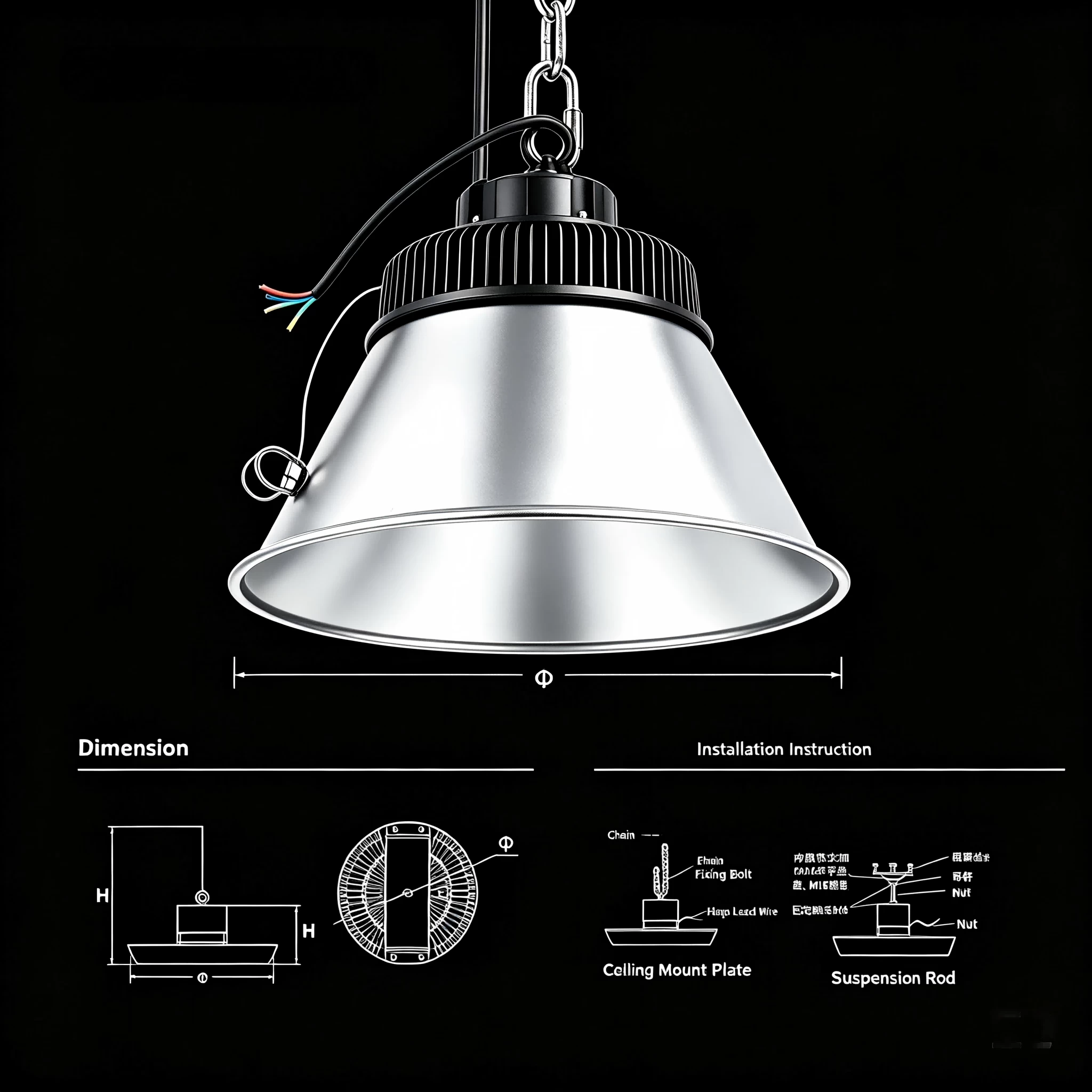
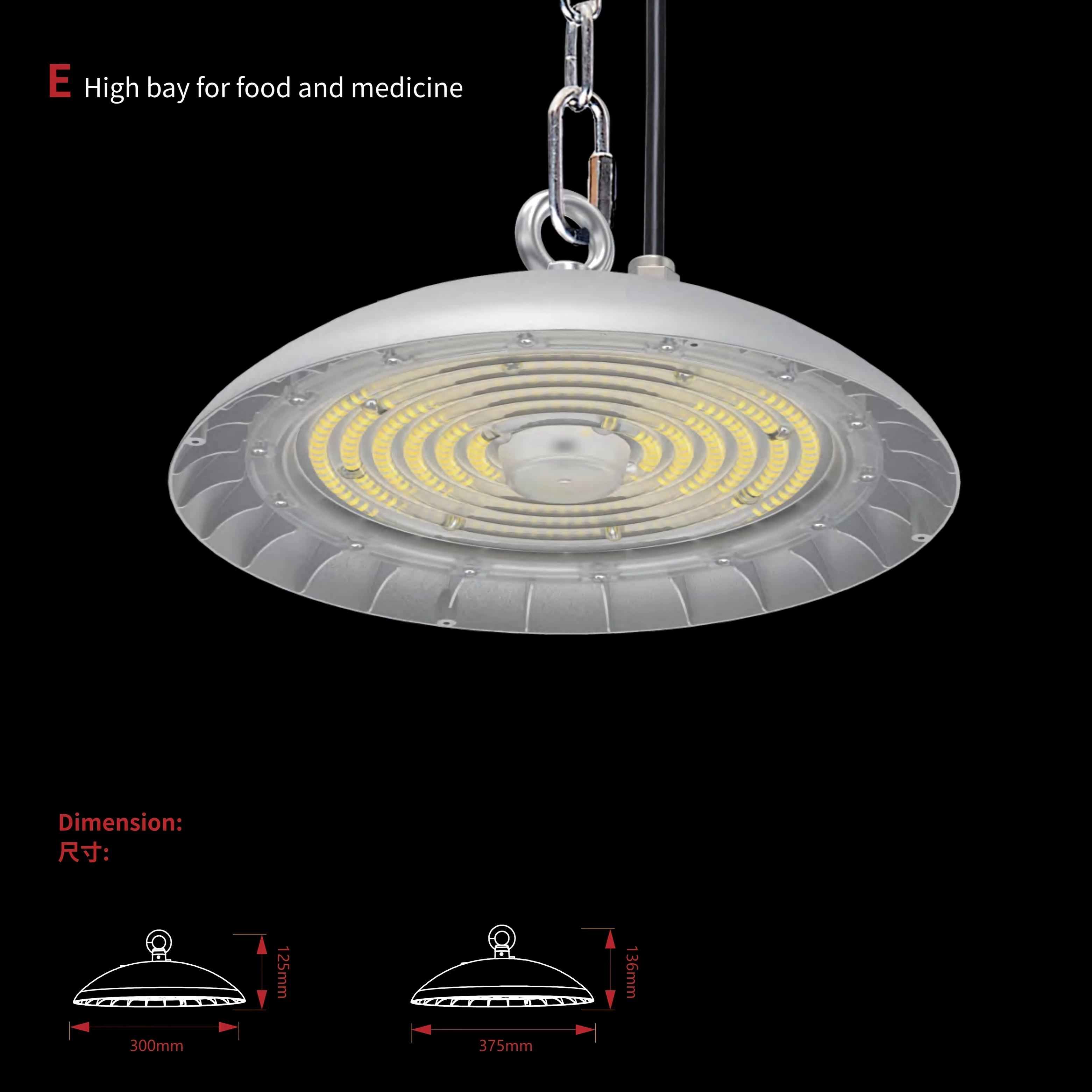
Most food safety audit schemes also require luminaires above open product areas to be protected so that breakage cannot contaminate product — in practice a shatter-resistant diffuser, a protective sleeve, or a fixture located outside the product zone. The wording differs between BRCGS, IFS and FSSC 22000, so confirm the clause with your auditor rather than assuming that a standard industrial fixture qualifies. In grading and packing areas, ask for the CRI and the SDCM colour-tolerance figure so replacements do not visibly mismatch existing rows. Where ceilings are high, a high bay may be the better choice — see our high bay selection and spacing guide and the E Series food and medical grade UFO high bay.
Application 3: Cold Storage and Freezer Warehouses
Cold storage is where a generic specification most often fails, because temperature interacts with sealing in ways an IP rating alone does not describe.
- Start-up at low temperature. The emitters themselves run well when cold, but the driver is the vulnerable part. Confirm in writing the minimum ambient temperature at which the driver is rated to start and to run continuously, and check that the figure covers the whole duty cycle including defrost.
- Condensation inside the housing. When a warm fixture is switched off in a cold room, or a sealed enclosure cools rapidly, pressure differences can draw moist air past a marginal seal, producing internal condensation and corrosion. Some sealed designs use a breathable membrane vent to equalise pressure while blocking liquid water; ask whether the design you are quoted includes one.
Freezer aisles are narrow, staff wear gloves and maintenance windows are short, so look for tool-light access and captive fasteners, and confirm that the cable and mounting hardware are low-temperature rated. Plan for frost on the diffuser too: output at the working plane drops while it builds up, so coordinate the lighting layout with the defrost schedule.
Other Environments Where These Fixtures Are Standard
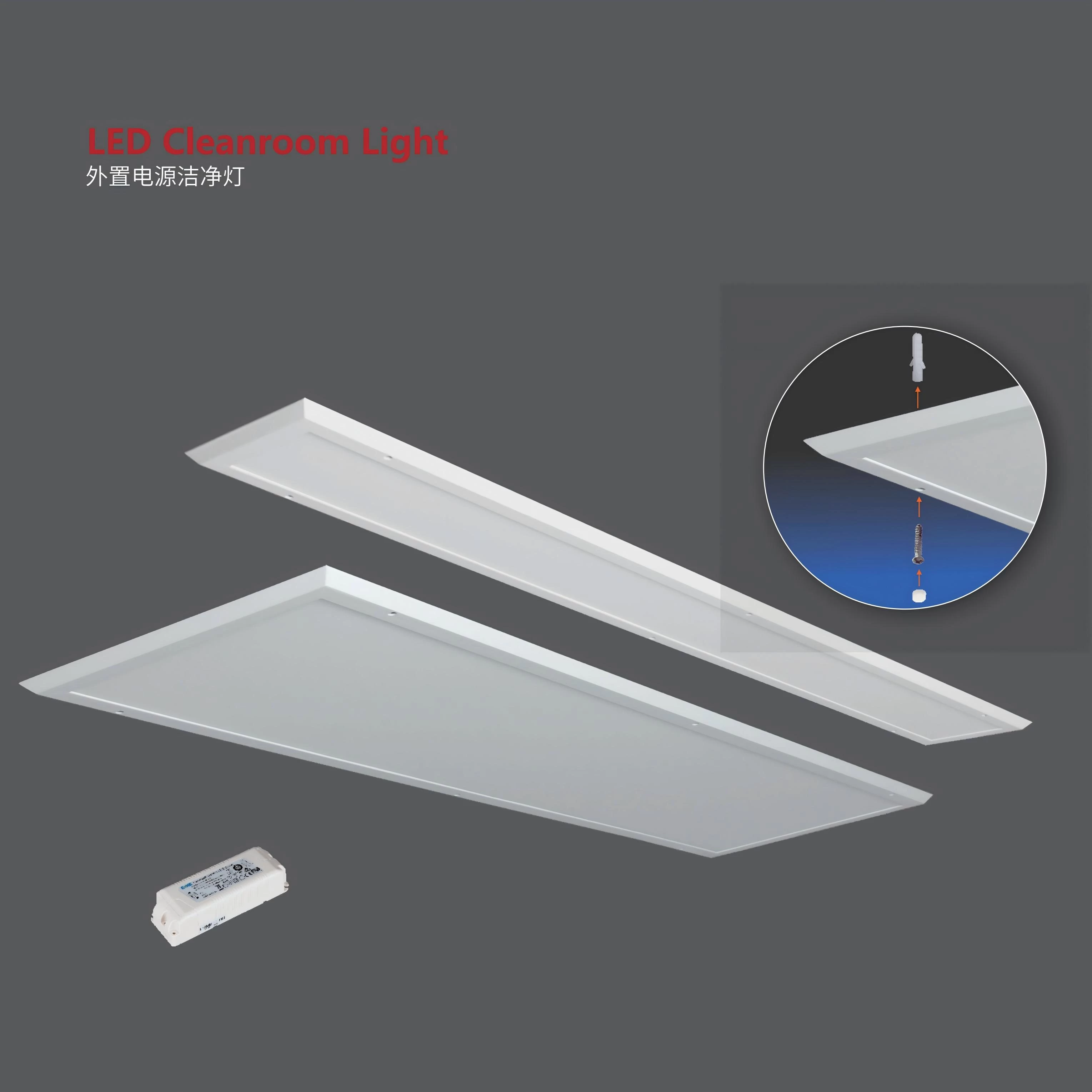
Road and rail tunnels and underpasses face washdown, exhaust residue and vibration, as covered in our LED tunnel lighting guide. Vehicle washes, agricultural buildings and water treatment plants combine humidity with ammonia or chemical exposure. In hazardous locations, where a flammable atmosphere is present, ingress protection is not enough and certified explosion-protected equipment is required — our DS Series explosion-proof high bay sits in that category — while cleanroom and dust-controlled environments call for something like our AC100-240V cleanroom light.
A Practical Specification Checklist for Your RFQ
Put these items in the enquiry itself rather than relying on a product title; it makes supplier quotes directly comparable.
- IP rating, confirmed for the complete fixture including end caps and cable entry, and IK rating with the joule value stated.
- Housing, diffuser, gasket and fixing materials, plus compatibility with the actual cleaning chemicals.
- Driver brand and rated ambient temperature range, including minimum start temperature.
- Luminous flux, efficacy (lm/W), CCT, CRI and SDCM.
- Control interface — on/off, 0-10V, DALI or sensor-ready — and whether sensing is integrated or external.
- Lumen maintenance claim stated as Lxx at a defined hour figure with the failure fraction, for example L70/B50 at 50,000 h; our article on L70 and lumen maintenance explains how to read these claims.
- Warranty terms in writing — duration, what is covered, and who bears freight and labour.
- Photometric files (IES or LDT) plus a calculation for your actual geometry; without them the offer is unverified.
- Certificates and spare parts — certificates matched to the destination market with matching model numbers, and lead times for clips, brackets, gaskets and drivers.
Where Solarix Fits
Guangzhou Xuyuan Lighting Technology (Solarix) manufactures LED luminaires for commercial, industrial, outdoor and rail transit applications, and much of our engineering work sits in environments where fixtures have to survive dust, moisture, vibration and continuous operation. Our catalogue is supplied with CE, CCC, PSE and RoHS certification; buyers should confirm the certificate scope for the specific model and the requirements of the destination market.
For a project that needs a dedicated tri-proof or vapor-tight linear fixture, send us the environment description — cleaning method, ambient temperature range, mounting height, target illuminance and control requirement — rather than a part number copied from another supplier's catalogue. We will confirm which of our current sealed luminaires, such as the IP65 8011 Series industrial high bay or the wider industrial lighting range, actually matches the requirement, and we will say so when a rating falls outside our current range instead of substituting a near-equivalent. The full catalogue is listed under All Products.
Frequently Asked Questions
Is IP65 enough for a car park?
For most covered car parks, yes — IP65 is a widely accepted baseline. Move to IP66 if the facility is pressure washed, and check the IK rating separately. Some municipal operators mandate a higher code, so confirm against the project specification before ordering.
What is the difference between IP66 and IP69K?
IP66 (IEC 60529) covers powerful water jets. IP69K (ISO 20653) covers high-pressure, high-temperature washdown and is normally requested only where hot water is applied at close range, such as food processing lines. Specifying IP69K for an ordinary car park adds cost without adding useful protection.
Do LED tri-proof lights work in freezers?
They can, but the rating printed on the box is not sufficient evidence. Confirm the driver's rated minimum start and operating temperature, ask how the enclosure handles condensation and pressure equalisation, and verify that the cable and mounting hardware are low-temperature rated.
Why do some "tri-proof" fixtures carry no IK rating?
Because tri-proof is a marketing term rather than a standard; a supplier can legitimately describe a sealed fixture as tri-proof while publishing no impact test data. If impact resistance matters in your application, request the IK rating and the test report explicitly.
Next Step
Define the environment first, then the rating: once the cleaning method, temperature range, mounting height and target illuminance are written down, the specification follows quickly and supplier quotes become genuinely comparable. If you are preparing an RFQ for a car park, food plant, cold store or similar environment, send Solarix the environment description and your photometric requirement, and we will confirm which of our certified luminaires fit. Browse our commercial and indoor lighting and outdoor lighting collections, or read more of our lighting guides.