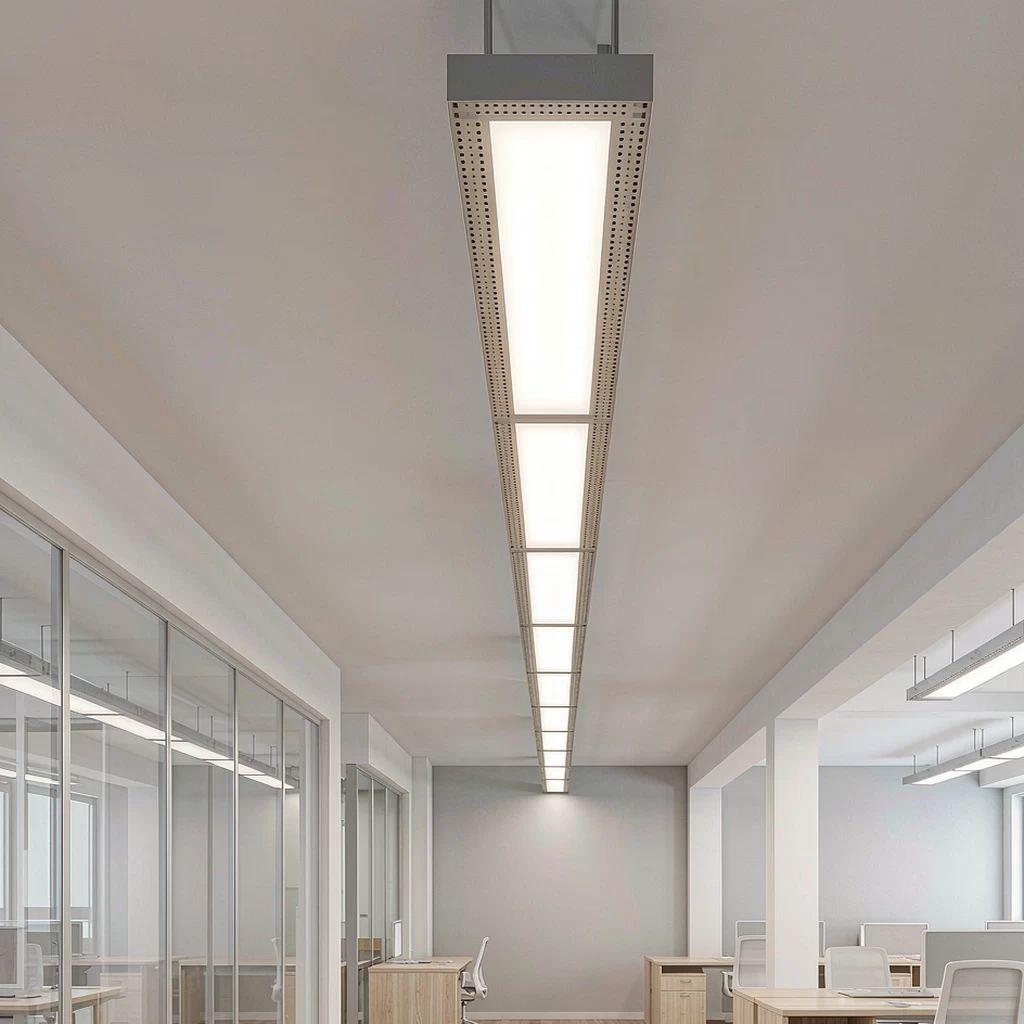
"Linear" is one of the most overloaded words in commercial lighting. Ask three suppliers to quote an LED linear light and you may receive three unrelated products: a slim suspended bar for an open-plan office, a 1,200 mm recessed module for a T-bar ceiling, or a sealed batten for a service corridor. They share a geometry — light emitted along a line rather than from a point — and very little else.
That ambiguity costs buyers money. A run that looked clean in the showroom can arrive on site with a bright seam at every joint or a colour shift between modules. This guide covers what the category contains, how the formats compare, which numbers decide whether a run looks right, and what to put in an RFQ so the quotes you receive are comparable.
What "LED Linear Light" Actually Covers
Most fixtures sold under this name fall into six groups:
- Suspended (pendant) linear — hung on rods or cables, often direct/indirect.
- Recessed linear — set into a T-bar grid, plasterboard or a slot.
- Surface-mounted linear — fixed to the slab where nothing can be cut.
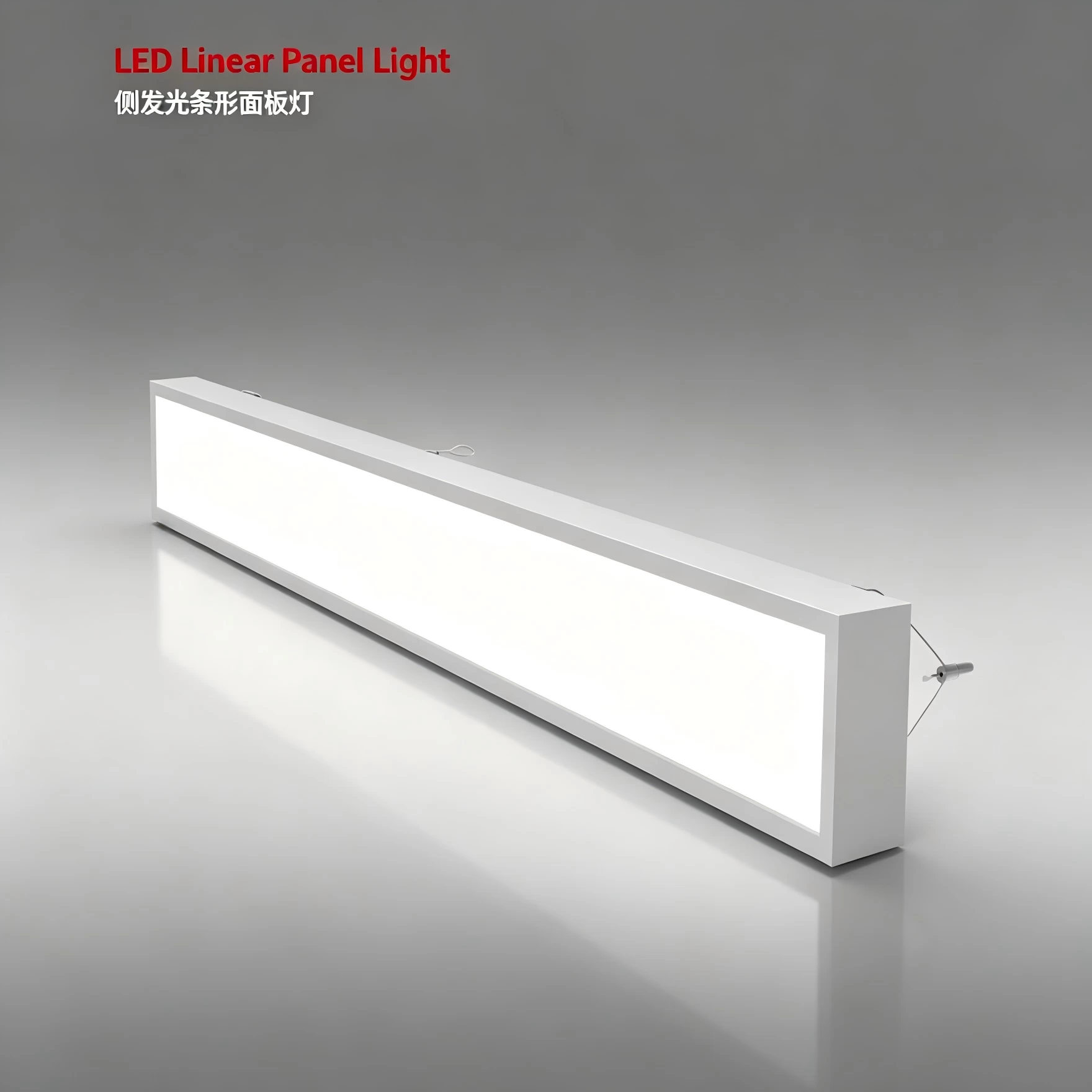
- Linear panel lights — flat modules in linear proportions, e.g. 295 × 1,195 mm.
- Battens — sealed, utilitarian linear fixtures, usually IP-rated.
- Linear high bays — heavy-duty bodies for high mounting heights.
If your RFQ says only "linear light", you will be quoted whichever of the six your supplier stocks. Name the format, ceiling type and run length in the first line of the request.
Where Continuous Linear Lighting Earns Its Keep
Linear is not automatically better than a grid of square panels. It wins when the architecture is directional or an unbroken line is part of the design intent.
| Space | Why linear works | Usual format |
|---|---|---|
| Open-plan office | Follows desk rows; indirect light | Suspended direct/indirect |
| Retail aisle | Leads the eye along merchandise | Recessed or surface |
| Classroom | Parallel to the board | Recessed or suspended |
| Corridor | Guides movement along the axis | Recessed or surface |
| Warehouse | Matches racking aisles at height | Linear high bay |
Where the ceiling is a regular acoustic grid and the plan shows no strong direction, a well-laid-out grid of LED panel lights for offices and commercial spaces usually costs less and installs faster. Linear wins when the layout, not the catalogue, decides.
Four Form Factors, Four Different Projects
Suspended linear
These keep the ceiling plane intact and can be positioned after the furniture layout is fixed. Two variables decide the result: whether the optic is direct, indirect or mixed, and how far the body drops below the slab. Get the photometric file before fixing the suspension length.
Recessed linear
Recessed gives the cleanest ceiling when the body matches the grid module. The risk is in the detail work — trimless plaster slots depend on the plasterer, and a mis-set grid shows up as a wavy joint line. It also assumes plenum depth for the driver.
Surface-mounted linear
Surface mounting suits retrofit and slabs that cannot be cut. Alignment sits entirely with the installer, so specify adjustable brackets or a continuous rail rather than assuming the slab is flat.
Seamless spliced runs
"Seamless splicing" often separates a good linear result from a mediocre one, and it means three things: the diffuser continues across the joint without a bright seam, the body ends are machined square so modules butt tightly, and one run can be fed from a single point. Confirm all three in writing — a "spliceable" claim may cover only the mechanical joint.
LED Linear Light vs LED Panel Light vs Batten
Choose linear when the run must read as one line, the ceiling has a strong axis, or you want an indirect component. Choose a panel when filling a standard grid evenly and cost per square metre dominates — the trade-offs are in LED downlights vs LED panel lights. Choose a batten when the space is utilitarian. Mixing all three in one building is normal: linear at the front of house, panels in the office grid, battens in the plant rooms.
The Specification Numbers That Decide Whether a Run Looks Right
Delivered light: lumens, efficacy and spacing
Efficacy in lm/W tells you how much light you get per watt, not whether the layout works. Start from target illuminance at the working plane and fixture spacing, then check efficacy — the method is in lumens, lux and watts. Be sceptical of figures measured on a bare module rather than the complete luminaire.
Glare: UGR and shielding
UGR is the number most often missing from linear datasheets, and the one that decides whether occupants complain. For office and classroom tasks, specification documents commonly cite UGR ≤ 19, with relaxed limits for circulation and industrial areas. A fixture can only be credited with a UGR value if the supplier can show the calculation basis — see what UGR means in commercial lighting.
Colour quality: CRI, R9 and consistency
Ra > 80 is the baseline for commercial interiors, but a high Ra can still hide weak red rendering, so have R9 stated separately for projects involving textiles, food, skin tones or brand colour. Also ask for colour tolerance: an SDCM (MacAdam step) figure predicts whether modules from different batches will match on the ceiling. See colour quality metrics for panel and linear lighting.
Colour temperature and batch drift
Mixing 3000 K, 4000 K and 6000 K across a project needs a deliberate plan — see the indoor colour temperature guide. The hidden risk is drift: fill a 60-module order from two production batches and the seam between them can be visible. Ask for a single batch, or at least for binning by SDCM.
Driver, dimming and flicker
Two questions matter: is the driver integrated or remote (remote is easier to service but needs plenum space), and which dimming interface does the project use? 0–10 V, DALI and phase-cut are not interchangeable, and a common retrofit error is specifying a fixture that cannot reach the low output the control system expects. Flicker at low dimming should be evidenced, not asserted — see verifying flicker-free and low blue light claims.
IP and IK ratings
For dry interiors IP43 is often enough; whether you need IP44, IP54 or higher depends on the space and local rules for wet or dusty areas. Check whether the rating covers the complete luminaire or only the gear tray — see the LED IP rating guide. IK (impact) matters for school corridors and concourses.
Lifetime claims
"50,000 hours" alone means very little. What matters is the maintenance level attached — L70, L80 or L90 — and the drive current it was measured at. See L70 and lumen maintenance.
Planning a Continuous Run
- Work in module lengths. Runs should be a multiple of the fixture length plus end caps or blank fillers. A 5,800 mm run built from 1,200 mm bodies needs a designed termination, not an improvised one.
- Decide where power enters. One feed point per run reduces visible cabling but requires the driver to be sized for the whole run and the connectors rated for daisy-chaining.
- Check voltage drop on DC runs. Conductor size and run length set how much of the rated output reaches the far end — the most common cause of a bright-to-dim gradient.
- Plan maintenance access. Confirm how a module mid-run is replaced without dismantling its neighbours.
- Coordinate with other trades. Sprinklers, detectors and diffusers share the ceiling axis, so agree the setting-out drawing before anything is cut.
Documentation to Request Before You Sign
- Photometric file (IES or LDT) for the exact model and optic being quoted
- LM-79 style test report for the complete luminaire, not a bare module
- LM-80 / TM-21 data if a lifetime figure is quoted
- Safety-standard reference for the luminaire family, plus a material or RoHS declaration where required
- Warranty terms in writing, including what voids them and how replacement works across borders
- The compliance marks the supplier holds for your destination market — and, for North American projects, whether the required listing and any energy-programme qualification are in place. Treat that as the buyer's own verification step.
A 12-Point RFQ Checklist for LED Linear Lights
- Form factor: suspended, recessed, surface, batten or linear high bay
- Ceiling type and grid module, plus plenum depth
- Run layout: total length, runs, module length, termination detail
- Power options and delivered lumens against target illuminance
- Efficacy in lm/W for the complete luminaire
- UGR value and its calculation basis
- CCT options, Ra, R9 and colour tolerance (SDCM)
- Dimming protocol; integrated or remote driver
- IP and IK ratings, and which parts they cover
- Lifetime claim with maintenance level and test current
- Photometric and test documentation attached to the quotation
- Packaging, spare parts and warranty terms for an export order
Where Solarix Fits
Solarix Lighting supplies linear and linear-format luminaires within a wider commercial and industrial range. Two examples, described as published on their product pages:
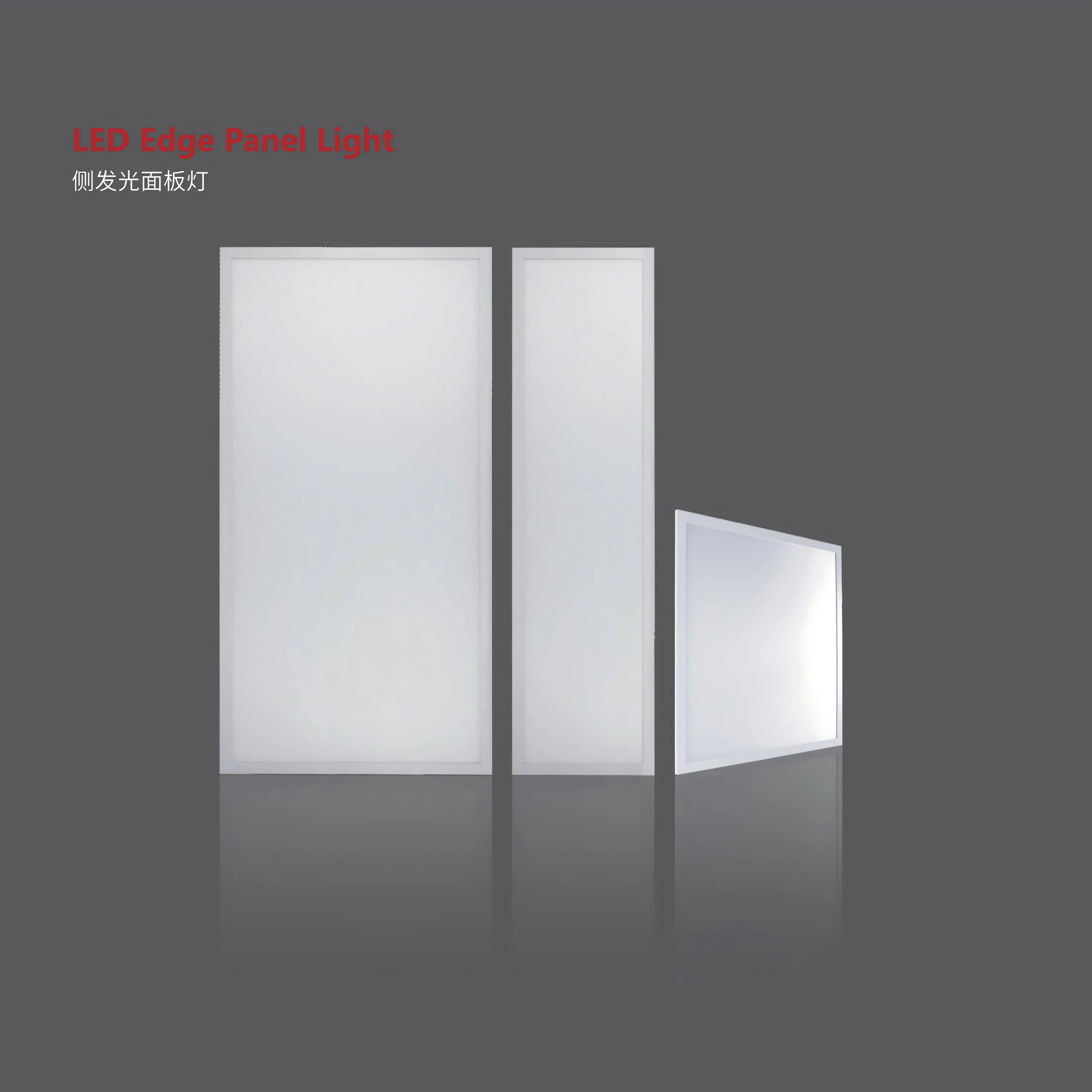
- Edge-lit LED linear panel light — 600 / 900 / 1,200 × 120 × 93 mm bodies, 9–40 W, 900–4,000 lm, up to 130 lm/W, Ra > 80, 3000 / 4000 / 5000 / 6000 K, 120° beam, IP43, suspended or recessed mounting with declared spliceability, AC90–250 V input.
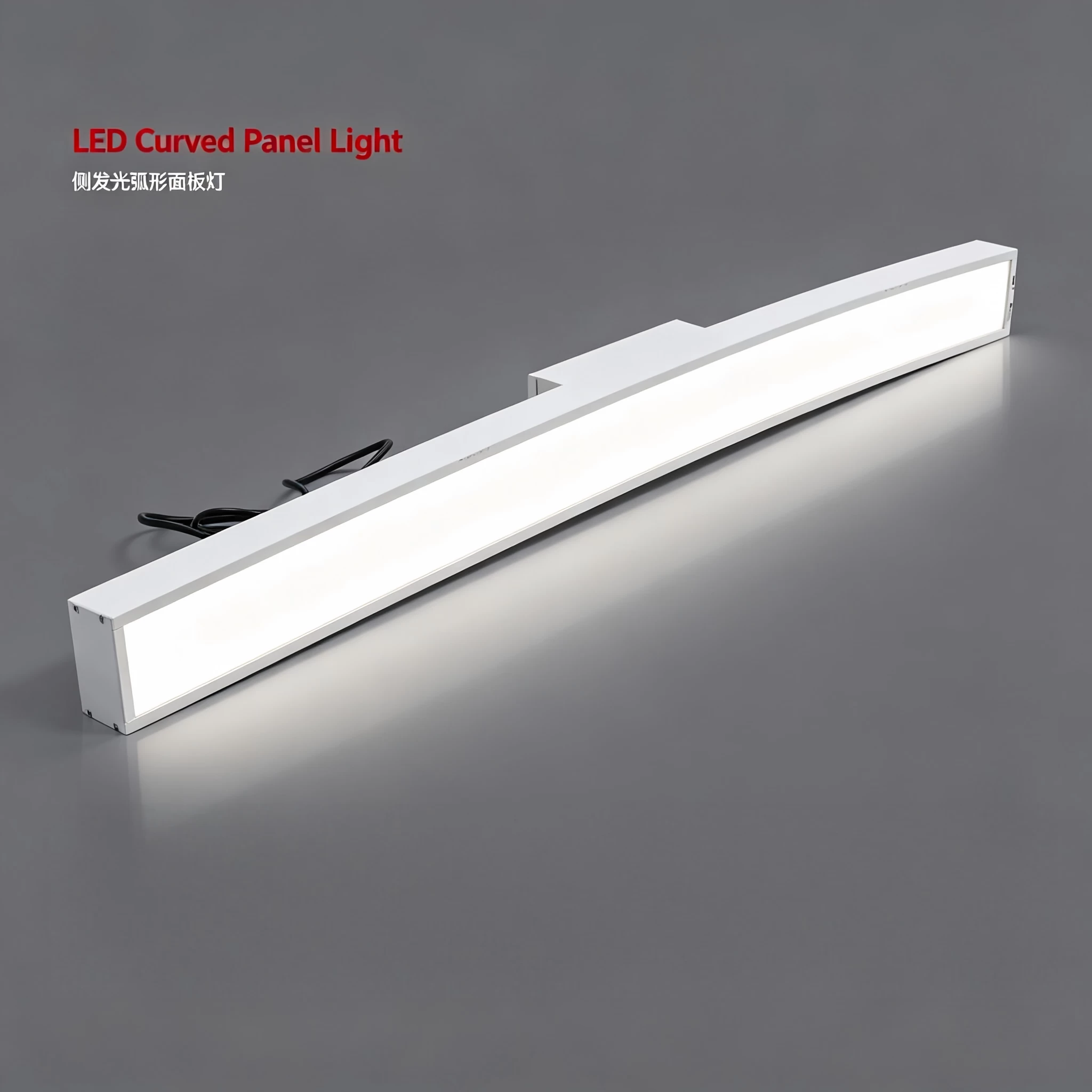
- Edge-lit LED curved linear panel light — a curved body for curved or vaulted ceilings, with custom length and width, SDCM ≤ 5, Ra ≥ 80, 90–130 lm/W and IP43.
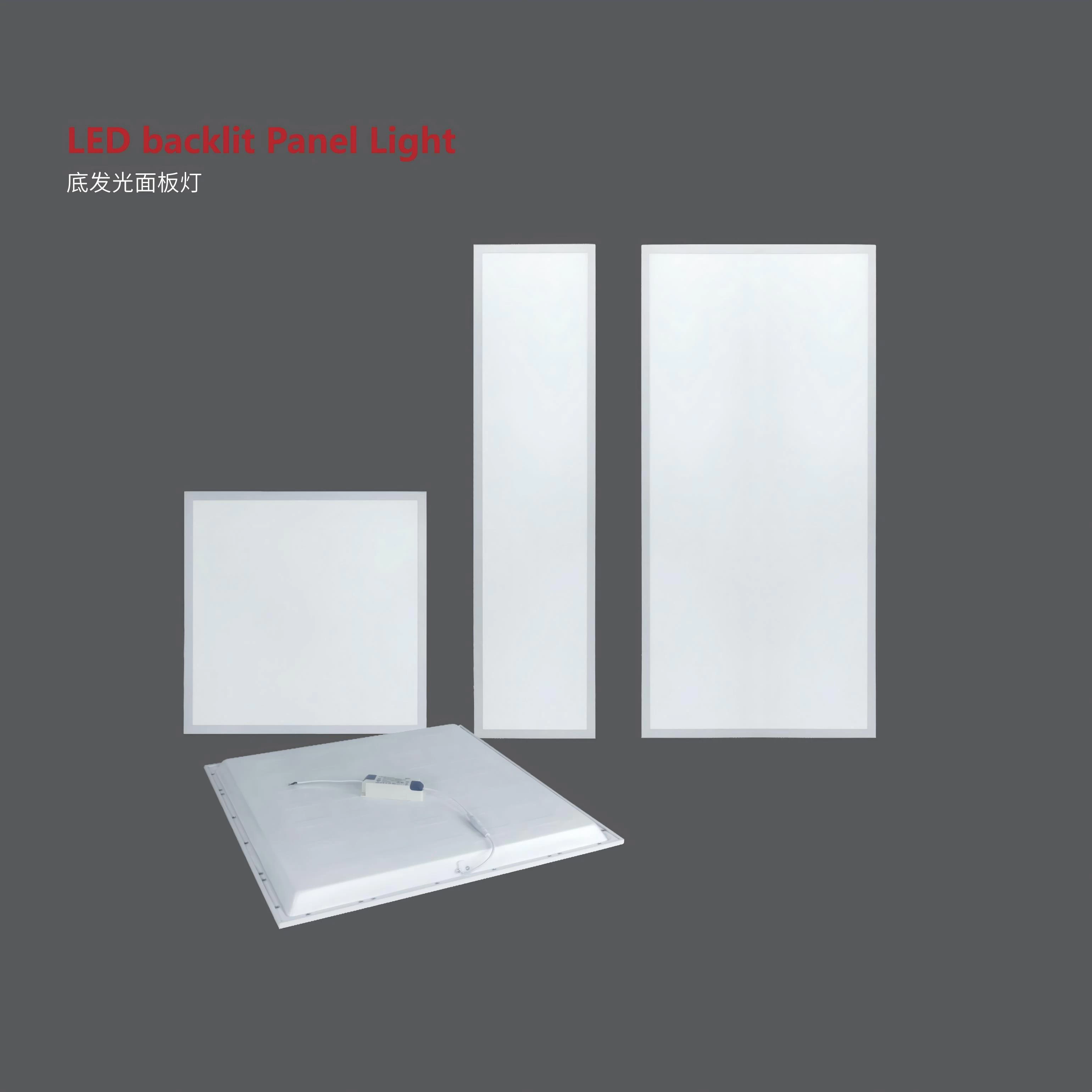
For grid ceilings the same families include linear-format modules with declared sub-16 UGR options at 130 lm/W (edge-lit) or 110 lm/W (backlit) — see the edge-lit low-UGR model and the backlit low-UGR model. Full ranges sit in the Panel Light collection, with higher-output linear high bays in Industrial Lighting. For driver selection on long runs, see choosing LED drivers.
Frequently Asked Questions
Is an LED linear light the same as a linear panel light?
No. A linear panel light is one sub-type: a flat rectangular luminaire, usually recessed into a grid ceiling. "LED linear light" also covers suspended, surface, batten and linear high bay formats.
How long can one continuous run be?
The limit is set by driver rating, connector rating, supply voltage and voltage drop. Ask for the maximum run length per feed point at the model you are buying; if the answer comes only in module count, request the equivalent in metres.
Do office linear lights need an IP rating?
Most dry office interiors are served by IP20 or IP43 fixtures. Higher ratings suit wash-down, dusty or semi-exposed areas, and some jurisdictions impose specific requirements. Confirm the requirement for the space rather than defaulting higher, since sealing affects heat management and cost.
What UGR value should I specify for offices and classrooms?
Specification documents commonly cite UGR ≤ 19 for office and classroom tasks, with relaxed limits for corridors and industrial areas. Treat that as a starting point and confirm the limit against the current edition of the relevant standard and local requirements.
Can I mix linear lights and panel lights in one building?
Yes. Keep CCT, CRI and colour tolerance consistent so the difference reads as a format change rather than a colour mismatch, and compare the UGR values wherever the two meet in one sightline.
Next Step
If your project has long runs, curved ceilings or a mix of linear and panel formats, send us the ceiling plan with mounting heights and target illuminance. Solarix can return a comparable quotation with the photometric file, specification table and compliance documentation listed above. Start from the Commercial & Indoor Lighting collection or browse everything in All Products.